
Now that we’ve done our detour through the idea that theology is art, let’s get back to Paul, shall we?
When Paul was taken to the place of debate, called the Areopagus, to explain what he was arguing about, his goal was to convert people to faith in Jesus Christ. I believe his method was an artistic one, similar to what I’ve been describing in these blog posts. His speech can be read as an exhortation to be careful and humble when we speak about the things of God.
It seems that Paul’s goal was to try and describe, as best he could, the one on whom he feels utterly dependent in hopes someone in the crowd would recognize Paul’s experience is similar to their own.
He says the unknown god is actually the god who created all things.
The God who made the world and everything in it, he who is Lord of heaven and earth, does not live in shrines made by human hands…
It would be ludicrous to think this God can or could live in a temple made by human hands.
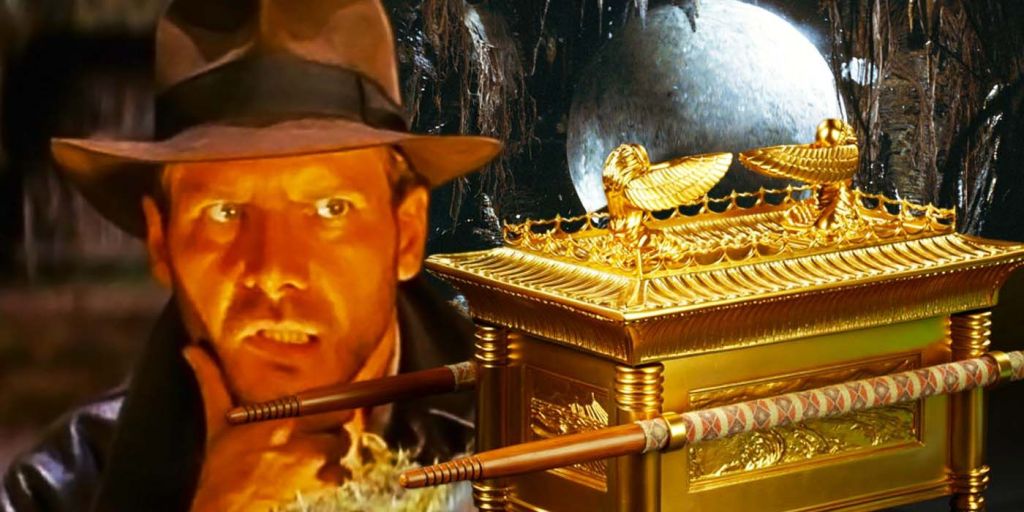
This might seem like a theological departure for Paul, a good Jewish boy. For many Jews, the Temple was where Heaven and Earth met. It was the holiest of places. It’s where the Ark of the covenant lived.
In fact, in the earliest years after the exodus from Egypt, the people understood God to take up residence in the Ark, but that was not entirely true. After the people finally settled in the Promised Land, there were a smattering of shrines across the land where offerings were made and prayers said. The Ark first lived in one and then another. It was, for a time, lost and captured by enemy nations.
It is true that the Ark served as a holy focal point in the peoples relationship to God, but God was never limited to it. The Psalms and writings of the Prophets were filled with statements about God’s rule over all the Earth, and this was the big theological leap forward. Before this, no one claimed theirs was the god of the whole world. Gods were localized and regional.
But not the God of Israel.
The God of Israel lives and moves everywhere.
In his speech, Paul goes on to say that if we think God needs anything from us, we are sorely mistaken.
…nor is he served by human hands, as though he needed anything, since he himself gives to all mortals life and breath and all things.
I think this is a powerful and powerfully convicting point, one which seems to be the subject of a great deal of biblical writing. Time and again, the people need reminding that God made everything, so offerings are not what is needed. We don’t have to curry favor with God. All that we have and are was given to us by God, “our entire life and breath.” We’ve got the direction of benefits wrong. God gives to us because we cannot even hope to give anything to the one who made everything.
What’s more, God is easy to find.
From one ancestor he made all nations to inhabit the whole earth, and he allotted the times of their existence and the boundaries of the places where they would live, so that they would search for God and perhaps grope for him and find him—though indeed he is not far from each one of us.
(Emphasis mine)
On occasion, I will get a gift in the mail with no note attached. My first impulse is to want to find out who did it so I can thank them. The same is true with us and God. Once the sense that whatever is beyond or more than us is responsible for “our life and breath,” once we can no longer deny the feeling of utter dependence, we want to seek out what we have named God. We want to know who or what this reality is. We have been showered with goodness, for no other reason, it seems, and that someone wanted to shower us.
Of course, we want to know them!
For “In him we live and move and have our being”; as even some of your own poets have said,
“For we too are his offspring.”
And the beauty of it all is the reason the one we seek isn’t far is because God is the one in whom we live and move and have our being.
I cannot get over how amazing this claim is. God is not distant. God is not separate. God is the water we swim in, that we drink, and that provides the basis of our entire being. No wonder we can’t restrict God to any temple or idol made with our hands. How would we even do that?! As Paul wrote to the Ephesians:
There is one body and one Spirit, just as you were called to the one hope of your calling, one Lord, one faith, one baptism, one God and Father of all, who is above all and through all and in all.
God is above, through, and in all things.
God is not containable.
God is wildly varied and diverse.
God is everywhere.


 PLGRM
PLGRM 
Leave a comment