
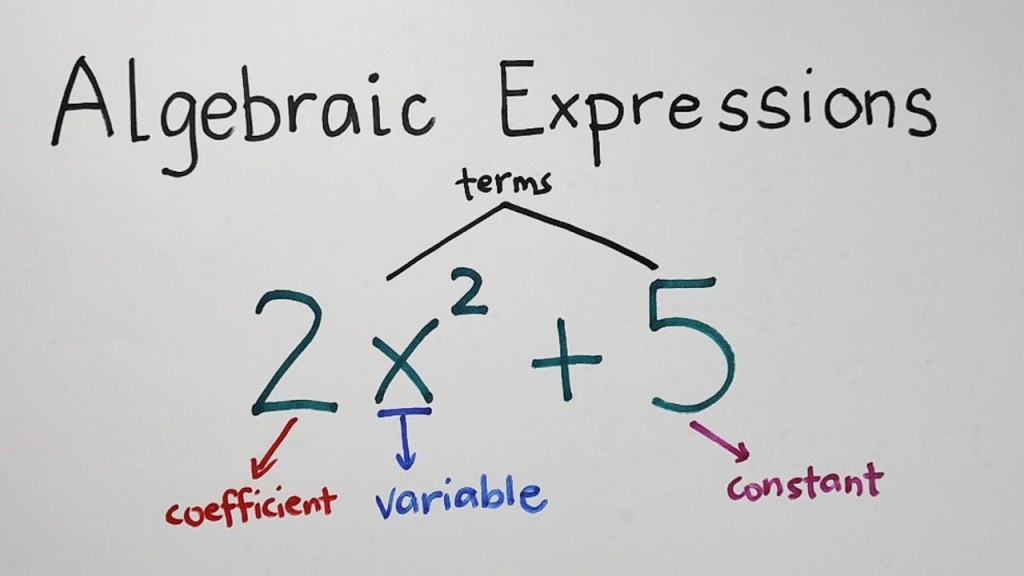
One thing that surprised me as a high school student was that I was good at math. I wouldn’t call myself a “math whiz” by any stretch, but I was better at calculations than I thought I would be.
Math was a puzzle to solve, and I enjoyed it, especially algebra. I was quite good at algebra. Adding and subtracting variables to either side of the equation made a lot of sense to my brain.
When I went to seminary and started studying Hebrew, I found that the language functioned a lot the same way as those algebraic expressions. There was a base word, and the meaning of it changed based on how you added something to the front or back of the word.
The thing in math that messed me up, however, was the idea of “the given.” The definition of a “given” in math is something “assumed to be true.” As in: “Given X (is true), solve for Y.”
It’s not that I didn’t understand the concept. It’s that (according to my little pea-sized, not yet fully cooked, adolescent “I need to argue with everything” brain) it felt illogical to claim that there were certain things that were true and undisputed, things upon which everything else was based.
“What happened if we found out that the mathematical givens we were using turned out to be wrong?” I would ask my math teacher.
“Well, they haven’t been wrong yet,” was his reply.
God bless my heart.
I think it takes us a while in our lives to accept that some things are just true. Not everything, but some things. There are things we don’t have to argue about. There are things we do not need to spend our time proving.
Gravity is one of those things. Are there fluctuations and all sorts of nuances to the science of gravity? Yes, there are. Does that impact the basics of it and the way it applies to my daily life? 100% it does not. Gravity is a given, and scientific givens help us make sense of a lot of other things.
We have been driving home the point that Jesus Christ reveals the very nature of God. In my post last week, I reminded us of some other ways God has revealed things to us – intentions, desires, expectations, etc. Jesus, however, is different than these revelations, and I left us with the question of why we even claim that. How can we even claim that?
We can claim certain things about Jesus because they are taught to us in the Bible. The Bible, for Christians, is “The Given.”
For Christians, the Bible is one of those things that (to borrow from my H.S. math teacher) “hasn’t been wrong yet.” And, because of that, we use the givenness of the Bible to construct all sorts of ideas about our lives of faith.
I want to step back for a moment and switch metaphors from math back to art.
One point I tried to make with our excursion into the idea of Theology as Art is that all the words we use are symbols. I also tried to encourage us that understanding our theological words as symbols was the only way we could avoid making God and other aspects of our faith into an idol. I don’t think any of us disagreed with that point, but do you realize we never took time to discuss where we got the symbolic words in the first place?
Our theological symbols come from the Bible.
In my church tradition, when we ordain and install leaders, we ask them a lot of questions. One of them is this:
“Do you accept the Scripture of the Old and New Testaments to be, by the Holy Spirit, the unique and authoritative witness to Jesus Christ in the Church universal, and God’s Word to you?”
In other words: If we want to know anything about Jesus, don’t we all agree that the Bible is the first and best place to look?
In official theological language, we call this idea the principle of Sola Scriptura. When the Church split in the 16th century, those that broke away from the Roman Catholic Church needed to be able to say where they got the authority for their new theological statements if they were not sanctioned by the Pope. The answer was: “The Bible.”
Since then, a portion of the Christian family has affirmed that if we want to know anything about what God is up to, then we look at Jesus, and if we want to know anything about Jesus, we look to the Bible.
The Bible sets the standard for our faith. Christians can and do say a lot of things about the Christian life, but – and this is key – they must line up with what the Bible shows us about Jesus.
And that’s where I would like to go next. There are a lot of stories and characters in the Bible. Frankly, Jesus is just one piece of it all. If we agree that the Bible is “The Given,” what is it telling us is so understood that we don’t need to argue or explore anymore?
Next time…


 PLGRM
PLGRM 
Leave a comment